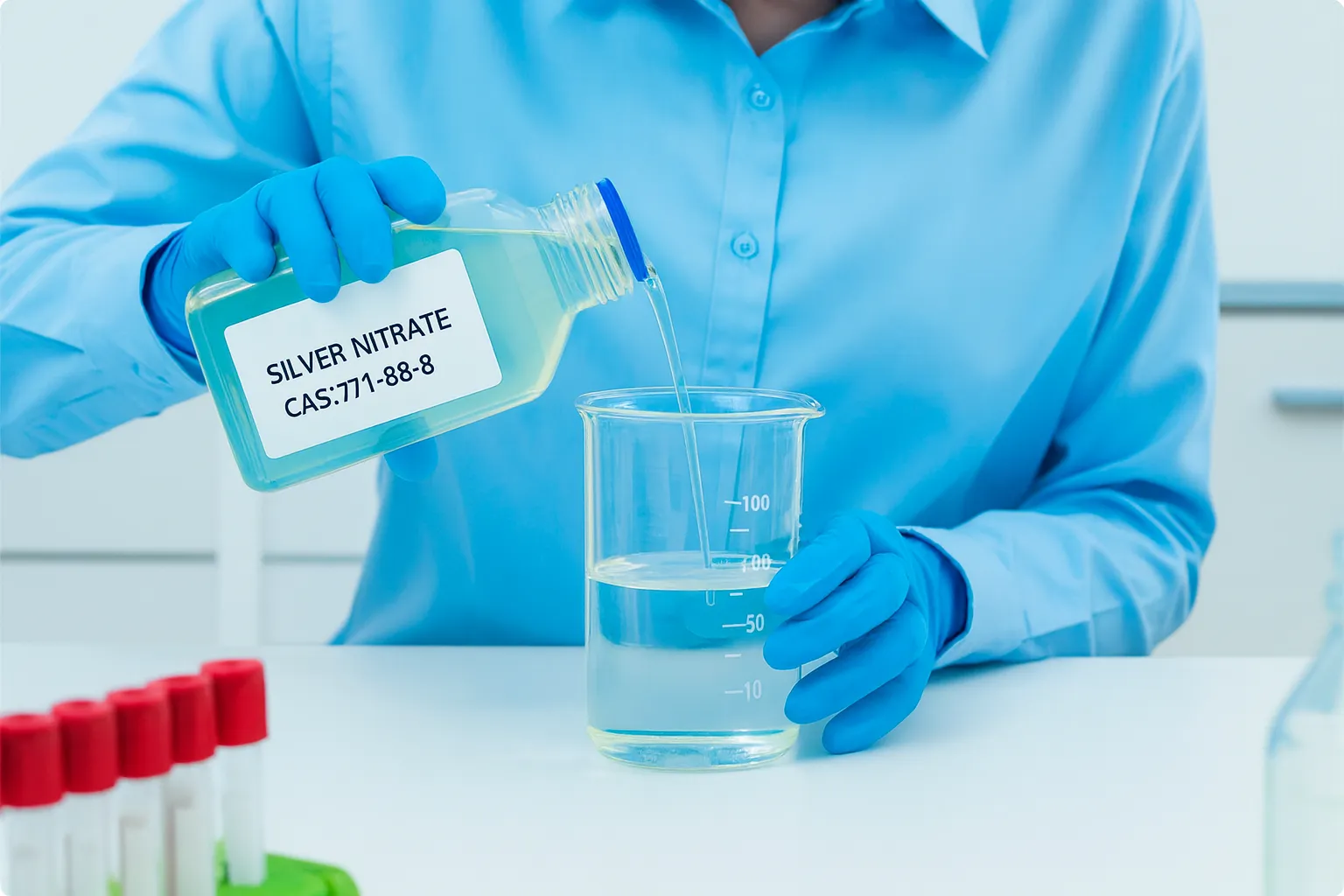
Silver nitrate has shaped analytical chemistry for generations. Here is how Merck AgNO₃ continues to support accurate halide testing, dependable titrations, and modern laboratory workflows across industries.
In analytical chemistry, silver nitrate is considered to be one of the most reliable reagents. It is the main instrument in halide analysis, environmental monitoring, qualitative testing, and many teaching lab demonstrations. Its predictable reactivity and clear precipitation behavior make it a trusted choice for titrimetric methods. Among the available variants, Merck silver nitrate is widely preferred because of its purity, stability, and consistent performance. When analysts refer to its chemical identity, they use the AgNO₃ CAS No. 7761 88 8, which is recognized in labs across the world.
This blog explains why Merck AgNO₃ is so important in laboratory work, how different argentometric methods use it, and what analysts should know about preparation, handling, and method selection.
Chemical Identity and Grade of Merck AgNO₃
Silver nitrate is known by its molecular formula AgNO₃. It is a highly soluble, white crystalline solid that reacts readily with halides. Its AgNO₃ CAS no. is 7761 88 8, although some catalogs and databases write it as 7761-88-8. These identifiers help maintain consistency and traceability in regulated environments.
The EMPARTA ACS grade from Merck is designed specifically for analysis. It provides the level of purity needed in QA and QC labs. Impurity limits are clearly documented and the product includes supporting certificates. This is important because argentometric titrations are sensitive to contaminants. Even small variations can affect endpoints or precipitation clarity.
Merck supplies AgNO₃ in light-protected bottles, as the compound is sensitive to light. Proper packaging helps prevent decomposition and ensures reliable analytical performance.
Core Analytical Applications of Silver Nitrate
Silver nitrate is used in several foundational analytical techniques. Its main value comes from the ability of Ag⁺ ions to react with halides to form sparingly soluble salts. These precipitates help analysts determine the amount of chloride, bromide, or similar ions in a sample.
1. Argentometric Titrations for Halide Analysis
Argentometric titrations remain the most common use of Merck silver nitrate. They offer accurate quantification of halides and are used in water testing, environmental monitoring, and chemical quality control.
Mohr Method
The Mohr method is a direct titration technique. Ag⁺ ions from the silver nitrate solution react with chloride ions to form AgCl. When all the chloride has been consumed, the excess silver ions react with the chromate indicator to form a red silver chromate. This gives a clear and sharp endpoint. The method works best at near-neutral pH and is ideal for routine chloride testing in laboratories. The method works best at near-neutral pH, so a properly prepared ph buffer solution can help maintain endpoint accuracy during chloride analysis.
Volhard Method
The Volhard method is a back titration technique. Excess silver nitrate is added to the sample. The unreacted Ag⁺ is then titrated with thiocyanate in the presence of ferric ions, which create a red ferric thiocyanate complex at the endpoint. This method is preferred when samples are acidic or when direct endpoints are not clear due to turbidity or color.
Fajans Method
The Fajans method uses adsorption indicators such as fluorescein. As silver chloride forms, the surface of the precipitate changes charge. The indicator responds to this surface change, creating a visible color shift at the equivalence point. This method is used when cleaner precipitates allow for sharper endpoints.
2. Qualitative Inorganic Analysis
Silver nitrate plays a pivotal role in classical qualitative analysis. It reacts with halides to give unique precipitates. These indicators help to locate the presence of chloride, bromide, or iodide ions. Learners and lab technicians resort to these reactions to be sure of the presence of the ions in various samples.
3. Water and Environmental Testing
The water we drink, the effluents from industries, and the wastewater should be within the chloride limits. To measure the chloride content accurately, standardized AgNO₃ solutions are employed. With Merck silver nitrate, it is easier to obtain stable results that are in line with the regulations.
4. Food and Beverage Testing
For foods containing added salt, a chloride test is required to provide the correct label and conduct quality checks. The amount of salt is determined with high reliability by silver nitrate titration.
5. Protein and Functional Group Tests
In biochemistry, silver nitrate is used in precipitation and colorimetric assays. It helps detect functional groups such as sulfhydryl groups or supports protein staining techniques in specific workflows.
6. Material and Nanoparticle Studies
AgNO₃ is the main source of silver when the method is that of silver nanoparticle synthesis. It serves as a material in a research setting that tracks surface changes, reduction pathways, and reaction progress.
7. Photometric and Turbidimetric Techniques
Silver nitrate can generate controlled turbidity for spectrophotometric determination of halides. Purity is important so that the reagent does not interfere with optical readings.
How to Choose the Right Analytical Method
Each argentometric method has strengths and limitations. Analysts select the technique based on the sample type.
- Choose Mohr when the sample can be kept near neutral pH and a chromate indicator is acceptable.
- Choose Volhard when working with acidic or colored samples or when direct endpoints are unclear.
- Choose Fajans when adsorption indicators give sharper endpoints and the matrix is clean enough to support them.
In practice, analysts confirm method suitability by checking recoveries, comparing endpoints, and validating across matrices.
Preparation and Standardization of AgNO₃ Solutions
Good preparation practices help ensure consistent titration results.
- Use freshly boiled or deionized water.
- Prepare solutions in clean, light-protected glassware.
- Avoid contamination from reducing agents or dirty containers.
- Label each solution with concentration, date, and batch number.
For accurate work, AgNO₃ titrant should be standardized. Sodium chloride primary standards or certified chloride solutions are commonly used. Standardization creates traceability and supports audits, especially in regulated labs.
Safe Handling and Storage
Silver nitrate is an oxidizing and light-sensitive salt. It should be stored in a cool, dark place. Dark glass bottles are ideal. Laboratories should follow SDS guidance for PPE and spill management. Silver waste must be collected and disposed of properly because silver compounds can be hazardous to the environment.
Why Analysts Prefer Merck Silver Nitrate
Merck silver nitrate is known for its high assay purity and batch consistency. This supports reproducible endpoints in titrations and prevents errors caused by impurities. Its EMPARTA ACS grade meets the needs of QA labs, environmental labs, pharmaceutical QC teams, and teaching institutions that require dependable reagents.
Audit-ready documentation, including COA and SDS files, helps maintain compliance. The reagent works well across titration, qualitative testing, spectrophotometric methods, and research applications, making it a versatile lab staple.
The Value of High Quality AgNO₃ in Reliable Laboratory Analysis
Silver nitrate continues to be one of the most important reagents in analytical chemistry. From halide titrations to qualitative testing, its accuracy and predictable reactivity support reliable laboratory work. Merck silver nitrate offers the purity and performance labs depend on, especially when consistent halide determination is critical.
If your laboratory needs trusted analytical grade silver nitrate, you can explore the Merck EMPARTA ACS variant available through Lab Chemicals. We ensure proper documentation, reliable supply, and product quality that supports accurate and repeatable results.