
Product Code
Product Name
CAS No.
Packing Size
Brand
Product Code
Product Name
CAS No.
Packing Size
Brand
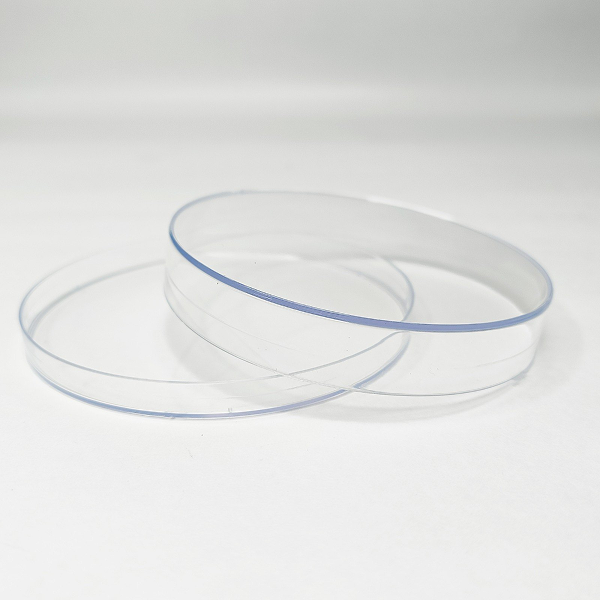
Laboratories rely on plastic petri dishes for precise and safe culturing of microorganisms. These disposable petri dishes are made from high-quality polystyrene, providing a clear view and smooth surface for consistent experimental observations.
Designed for single-use, plastic petri plates minimize the risk of cross-contamination while supporting accurate, reliable results. Their ergonomic design makes them easy to handle and store, making them suitable for both research and educational settings.
Trusted by microbiologists, pharmaceutical researchers, and academic institutions, these plastic petri dishes offer a practical and dependable solution for daily laboratory work. Their robust construction and transparency ensure that cultural growth can be monitored efficiently, enhancing workflow and productivity.
For laboratories that require consistency, these plastic petri plates offer a practical surface for microbial studies. Made from clear polystyrene, they allow unobstructed observation of culture throughout incubation. Their design supports smooth handling across research, clinical, and academic laboratory workflows.
These attributes help laboratories maintain consistent and dependable results in every experiment. The combination of clarity, strength, and precision makes these disposable petri dishes ideal for both everyday and specialized laboratory applications.
The following specifications outline the design and usability of these disposable petri dishes for routine laboratory work. Each detail is aligned with standard microbiological practices to ensure consistent performance. The material and size are selected to support accurate culture growth and observation.
| Parameter | Details |
| Product Type | Disposable Petri Dish |
| Material | Polystyrene |
| Size | 90 x 15.8 mm |
| Sterilisation | Gamma radiated |
| Packaging | 480 Nos per pack |
These specifications make the petri dish plastic suitable for both high-volume testing and controlled laboratory experiments. Their consistency and reliability support dependable results across different applications.
Microbiological testing requires controlled conditions and consistent tools. These plastic petri dishes are used in environments where precise culture handling and observation are essential. Their design supports reliable sample placement and growth analysis across different laboratory setups.
They are widely applied in:
In these applications, disposable petri dishes help maintain hygiene and reduce contamination risks. Their practical structure and standardised sizing make plastic petri plates suitable for routine laboratory workflows.
1. What is a plastic petri dish used for?
A plastic petri dish is used to grow and observe microorganisms in laboratory settings, including microbiology, pharmaceutical research, and academic studies.
2. Are these disposable petri dishes sterile?
Yes, these disposable petri dishes are gamma-radiated and supplied sterile, making them ready for immediate laboratory use.
3. What material is used to manufacture petri dish plastic products?
These petri dish plastic products are made from high-quality polystyrene, which provides clarity and a smooth surface for culture growth.
4. Can plastic petri plates be used for both bacterial and fungal cultures?
Yes, plastic petri plates are suitable for culturing both bacteria and fungi under controlled laboratory conditions.
5. Why are disposable petri dishes preferred over reusable ones?
Disposable petri dishes help reduce cross-contamination and save time by eliminating the need for cleaning and re-sterilisation.
6. How should plastic petri dishes be handled before use?
Keep the dishes sealed in their original packaging until use and handle them carefully to maintain sterility.
The following specifications outline the design and usability of these disposable petri dishes for routine laboratory work. Each detail is aligned with standard microbiological practices to ensure consistent performance. The material and size are selected to support accurate culture growth and observation.
| Parameter | Details |
| Product Type | Disposable Petri Dish |
| Material | Polystyrene |
| Size | 90 x 15.8 mm |
| Sterilisation | Gamma radiated |
| Packaging | 480 Nos per pack |
These specifications make the petri dish plastic suitable for both high-volume testing and controlled laboratory experiments. Their consistency and reliability support dependable results across different applications.
Microbiological testing requires controlled conditions and consistent tools. These plastic petri dishes are used in environments where precise culture handling and observation are essential. Their design supports reliable sample placement and growth analysis across different laboratory setups.
They are widely applied in:
In these applications, disposable petri dishes help maintain hygiene and reduce contamination risks. Their practical structure and standardised sizing make plastic petri plates suitable for routine laboratory workflows.
1. What is a plastic petri dish used for?
A plastic petri dish is used to grow and observe microorganisms in laboratory settings, including microbiology, pharmaceutical research, and academic studies.
2. Are these disposable petri dishes sterile?
Yes, these disposable petri dishes are gamma-radiated and supplied sterile, making them ready for immediate laboratory use.
3. What material is used to manufacture petri dish plastic products?
These petri dish plastic products are made from high-quality polystyrene, which provides clarity and a smooth surface for culture growth.
4. Can plastic petri plates be used for both bacterial and fungal cultures?
Yes, plastic petri plates are suitable for culturing both bacteria and fungi under controlled laboratory conditions.
5. Why are disposable petri dishes preferred over reusable ones?
Disposable petri dishes help reduce cross-contamination and save time by eliminating the need for cleaning and re-sterilisation.
6. How should plastic petri dishes be handled before use?
Keep the dishes sealed in their original packaging until use and handle them carefully to maintain sterility.

Copyright 2026 © All Right Reserved | Design, Developed & Marketed by
