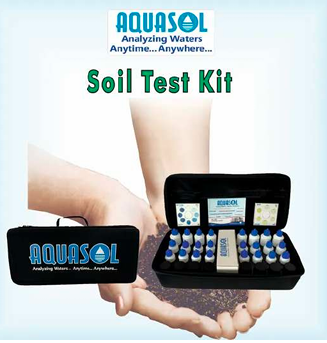
Soil testing is a vital step in understanding the health and fertility of your land.Understanding the health and fertility of your land is the foundation of productive agriculture, successful environmental monitoring, and responsible land management. Using a soil testing kit or dirt testing kit, you can analyse your soil to determine nutrient levels, pH balance, organic carbon content, and potential contaminants the same insights the original content described, now presented with the APHA/AWWA/IS-validated procedures needed for professional and compliance use. Whether you are checking a backyard garden, preparing a field for planting, or conducting a formal environmental site assessment, this kit gives you quick, accurate, and reliable results to guide your soil management decisions.
Parameter / Feature | Detail |
Parameters tested | Nitrogen (N), Phosphorus (P), Potassium (K), pH (acidity/alkalinity), Organic Carbon |
Application | Onsite field test and laboratory use |
Standards | Based on APHA / AWWA / IS international standard methods |
Validation | Tested and validated by leading NABL-accredited laboratories |
Kit format | Portable carry case with all reagents, test tubes, comparators, and procedure cards |
Procedures | Easy-to-follow colour-coded steps — no specialist chemistry background required |
Results | Rapid, accurate, and reliable same-session results |
Shelf life | Long shelf life — economical for institutional stocking and bulk ordering |
Users | Home gardeners, farmers, landscapers, environmental labs, government programmes |
Soil testing provides crucial information about nutrient content, soil pH levels, and organic carbon. Soil testing provides crucial information that directly impacts fertilisation decisions, crop performance, and environmental compliance. Without it, applications of fertiliser and soil amendments are guesswork. As the original content correctly identified, three factors determine whether your soil can support healthy growth:
Identify deficiencies in major nutrients like Nitrogen, Phosphorus, and Potassium, all essential for plant growth. The three macronutrients Nitrogen, Phosphorus, and Potassium are essential for plant growth at every stage. Identifying deficiencies before fertilising prevents under-application that limits yield and over-application that wastes money, harms plant health, and risks nutrient runoff into waterways. Over-fertilizing without testing can harm both your plants and the environment.Over-fertilising without testing is one of the most common and avoidable causes of both poor crop performance and environmental damage which is exactly why using a soil testing kit before applying fertilisers is essential to ensure accurate nutrient analysis.
Using a soil acidity tester or soil and pH tester, you can check if your soil is too acidic or alkaline. This directly affects how well plants absorb nutrients.Soil pH controls the availability of virtually every plant nutrient and the activity of soil microorganisms. Using the soil acidity tester function of this kit, you can determine whether soil is acidic, neutral, or alkaline and assess whether lime or sulphur amendments are needed. Most crops perform best between pH 6.0 and 7.0. Calibrate your measurement equipment against certified pH buffer solutions at reference points (pH 4.0, 7.0, and optionally 9.2) before testing to ensure accurate readings.
Essential for soil structure, water retention, and overall plant health. Organic carbon is essential for soil structure, water retention, and overall plant health and is one of the key differentiators of this kit over simple NPK-only alternatives. It improves the physical properties of soil, increases water-holding capacity in sandy soils, contributes to structural stability of clay soils, holds a large proportion of plant-available nutrients, prevents nutrient leaching, and is integral to the organic acids that make minerals available to plant roots. For environmental applications, organic carbon is also measured for contamination assessment and carbon sequestration verification.
Nutrient | Primary role (from original content) | What deficiency or excess indicates |
Nitrogen (N) | Boosts leafy growth and gives plants their deep green colour | Deficiency: pale, stunted plants. Excess: excessive vegetative growth, poor fruiting, contamination risk |
Phosphorus (P) | Aids root development, cell division, and protein synthesis | Deficiency: purple leaf discolouration, weak root systems. Excess: micronutrient lockout (zinc, iron) |
Potassium (K) | Enhances disease resistance, flowering, fruiting, and sugar movement within the plant | Deficiency: marginal leaf scorch, poor flowering and fruit set. Most easily leached from sandy soils |
Soil pH | Controls availability of all nutrients and soil microbial activity | Too acidic (<5.5): aluminium/manganese toxicity. Too alkaline (>7.5): iron, zinc, manganese deficiency |
Organic Carbon | Essential for soil structure, water retention, and overall plant health | Low OC: poor structure, nutrient leaching, low water-holding capacity. Critical baseline for new fields |
Without the right nutrient balance, plants struggle to grow. Over-fertilizing without testing can harm both your plants and the environment. That’s why using a soil testing kit or dirt testing kit is essential to ensure accurate nutrient analysis before applying fertilizers. Without the right nutrient balance, plants struggle to grow. Over-fertilising without soil testing can harm both your plants and the environment which is exactly why accurate nutrient analysis before applying fertilisers is essential for farmers, landscapers, and land managers alike.
The soil and pH tester capability in this kit is the most frequently used function for both agricultural and environmental applications. Using a soil acidity tester or soil and pH tester, you can check if your soil is too acidic or alkaline. This directly affects how well plants absorb nutrients. Soil pH directly determines how effectively applied fertilisers are absorbed by plant roots — even a perfectly fertilised soil will underperform if pH is outside the optimal range for the crop. For accurate field results, collect composite soil samples (5–10 sub-samples per plot), prepare samples following the kit procedure card, and record readings with sample ID, date, and batch number for traceability. For laboratory use, verify instrument calibration using certified pH buffer solutions before each testing session.
Our soil testing kits, dirt testing kits, and soil and pH testers are designed for home gardeners, farmers, landscapers, and professionals. Whether you’re checking your backyard garden or preparing a field for planting, these tools give you quick and accurate results to guide your soil management decisions.This kit serves every level of user from the home gardener checking a backyard plot to the professional agricultural advisor preparing a field for planting to the environmental laboratory conducting a formal compliance survey:
A dirt testing kit typically refers to a basic consumer product designed for casual home use approximate colour-match readings, no standard validation, suitable for gardening guidance only. This kit occupies a different category — it serves both the home user and the professional, with the added credibility of APHA/AWWA/IS method compliance and laboratory validation:
Feature | Consumer dirt testing kit | This soil test kit |
Standards | None stated | APHA / AWWA / IS methods |
Validation | Not validated | NABL-accredited laboratory validated |
Parameters | NPK + pH only | NPK + pH + Organic Carbon |
Result use | Home guidance only | Suitable for regulatory/compliance reporting |
Users | Home gardeners | Gardeners through to professional labs |
Format | Basic plastic box | Portable carry case, professional quality |
Shelf life | Short | Long — suitable for institutional stocking |
Procedure standard | Not standardised | Easy-to-follow APHA/IS-based procedure cards |
Lab Chemicals has supplied analytical instruments, field testing kits, laboratory chemicals, and reagents to environmental testing laboratories, agricultural research stations, government departments, and industrial facilities across India for over three decades. We supply this soil testing kit with full technical documentation and can provide bulk pricing for institutional orders. For a complete soil analysis workflow, we also supply weighing balances for laboratory for accurate soil sample weighing before preparation, and certified pH buffer solutions for instrument calibration before field deployment so your entire soil analysis programme can be sourced from a single trusted supplier.
This soil testing kit tests for five parameters: Nitrogen (N), Phosphorus (P), Potassium (K), soil pH, and Organic Carbon. Together these give a complete picture of soil fertility, acidity, and organic matter content all the information needed for informed fertilisation decisions, crop management, and environmental assessment. Based on APHA/AWWA/IS standard methods, results are suitable for both agricultural guidance and formal compliance reporting.
A soil acidity tester measures the pH value of your soil — the scale from 0 (extremely acidic) to 14 (extremely alkaline) that controls how well plants can absorb nutrients. Most crops perform best between pH 6.0 and 7.0. If soil pH falls outside this range, plants cannot properly absorb nutrients even when they are present in the soil meaning fertilisers are wasted and plants underperform. This kit includes a soil acidity tester function using validated colour-comparison reagents that give reliable readings in the field without specialist equipment.
Yes. The kit is designed for the full range of users — from home gardeners checking a backyard garden or raised bed before planting to farmers preparing fields at scale to environmental labs conducting formal surveys. The easy-to-follow procedure cards make it accessible without specialist chemistry knowledge, while the APHA/AWWA/IS standard compliance and laboratory validation make the results credible for professional and regulatory applications.
A dirt testing kit typically refers to a simple consumer product for home gardening use it provides approximate colour-match readings with no stated analytical standard or laboratory validation. This professional soil testing kit follows APHA/AWWA/IS standard methods, is validated by NABL-accredited laboratories, includes organic carbon testing (absent from most consumer kits), and produces results suitable for regulatory compliance reporting and formal land management decisions.
For accurate soil pH measurement, collect composite samples (5–10 sub-samples per plot) to get a representative reading rather than testing a single spot. Follow the kit procedure card exactly, using the correct soil-to-reagent ratio. For laboratory pH meter use alongside this kit, calibrate against certified pH buffer solutions at pH 4.0 and 7.0 before each session. Record sample ID, date, and kit batch number for traceability. Retest after any soil amendment (lime, sulphur, compost) to track pH change over time.
Organic carbon is essential for soil structure, water retention, and overall plant health — three functions that NPK testing alone cannot capture. It determines the soil’s cation exchange capacity (its ability to retain applied nutrients), water-holding capacity (critical for drought resilience), and overall biological activity. Many soil improvement programmes require baseline organic carbon data to track the effectiveness of compost additions, cover cropping, and reduced tillage practices. Measuring it alongside NPK and pH gives a genuinely complete soil health picture.
Yes. The kit procedures are based on APHA/AWWA/IS standard methods and have been tested and validated by leading laboratories. This makes the results suitable for environmental impact assessments (EIA), soil quality reports submitted to regulatory bodies, contamination investigations, and land-use change documentation. Record results with sample ID, collection date, test date, and kit batch number for a compliant audit trail.
Applying too much fertiliser without soil testing is one of the most common and costly agricultural mistakes. Excess nitrogen can cause rapid vegetative growth at the expense of fruiting and is highly mobile in soil — it leaches into groundwater and waterways causing eutrophication. Excess phosphorus locks out zinc, iron, and other micronutrients. Excess potassium can cause magnesium and calcium deficiencies. Testing before application ensures you apply only what is needed — protecting plant health, saving money, and preventing environmental contamination.