Product Code
Product Name
CAS No.
Packing Size
Brand
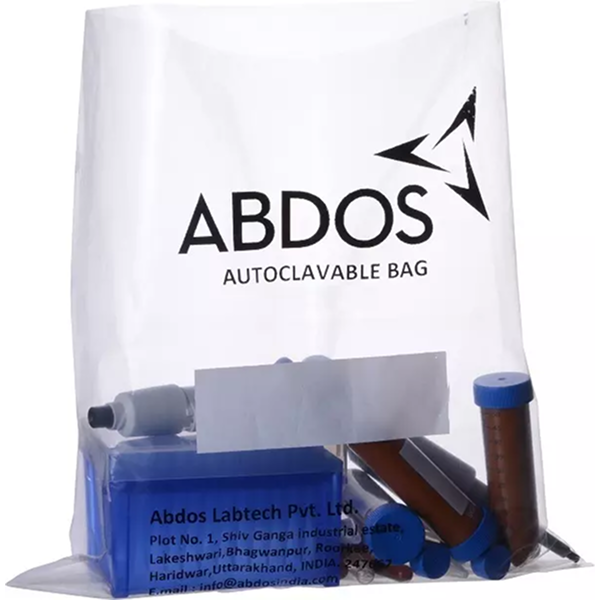
Autoclavable bags are an essential consumable for laboratories and healthcare facilities handling bio-contaminated materials that require safe sterilisation before disposal. These PP autoclave pouches are manufactured from high-grade polypropylene and sized at 16×24 inches to accommodate culture flasks, petri dish stacks, pipette tip racks, and other laboratory disposables. They withstand the high temperatures and pressures of standard autoclave cycles (121°C gravity cycle and 134°C vacuum cycle), retaining full structural integrity without leaking, tearing, or rupturing. Supplied 100 bags per case, they are used in research laboratories, pharmaceutical manufacturing units, hospitals, and diagnostic centres across India. Lab Chemicals supplies these autoclavable plastic bags with pan-India delivery and short lead times.
Autoclavable bags are used wherever biological or microbiological waste must be sterilised before disposal to render it safe, non-infectious, and compliant with biomedical waste regulations. The 16×24 inch size accommodates the full range of standard laboratory disposables generated per experiment or work session.
In microbiology, cell biology, and molecular biology laboratories, autoclavable bags collect used culture media plates, pipette tips, microcentrifuge tubes, cell culture flasks, and other contaminated plasticware. After filling, the bag is sealed, autoclaved to achieve sterilisation, and then disposed of as conventional waste. Used petri dishes are one of the most common items collected in autoclavable bags after microbiological culture experiments.
In hospitals, diagnostic laboratories, and clinical settings, autoclavable bags are used for the collection and sterilisation of category 3 biomedical waste sharps containers, microbiological cultures, blood-contaminated materials, and laboratory disposables under the Bio-Medical Waste Management Rules (BMW Rules, 2016 as amended). The transparent PP construction allows waste category verification before autoclaving without opening the bag.
In pharmaceutical manufacturing facilities, autoclavable bags are used in aseptic processing areas for collection of microbiology QC waste including environmental monitoring plates, bioburden samples, media fill materials, and contaminated disposables from cleanroom operations. They support compliance with Schedule M GMP requirements for waste management in pharmaceutical manufacturing premises.
These autoclave pouches withstand both standard gravity autoclave cycles (121°C, 15 psi, 15–30 minutes) and pre-vacuum/vacuum cycles (134°C), which are used in hospital and pharmaceutical autoclave systems. At these temperatures and pressures, the polypropylene film maintains dimensional stability without melting, shrinking, or allowing seam failure. This ensures the contents remain contained throughout the sterilisation cycle.
The minimum 50 micron PP film provides resistance to puncture from sharp items such as broken glass, pipette tip boxes, or sharps containers placed inside the bag. Polypropylene maintains its structural strength across the full autoclave temperature range without becoming brittle at room temperature or softening prematurely during heating. This combination of toughness and temperature tolerance makes PP the material of choice for autoclave bags over polyethylene, which softens at lower temperatures.
The bag's seams are heat-sealed to prevent leakage of liquid waste or condensate during the autoclave cycle. Before autoclaving, the bag should be closed using a tie, autoclave tape, or heat sealer depending on the liquid content. The transparent PP allows visual inspection of the seal integrity before loading into the autoclave.
These autoclavable plastic bags are compatible with all standard gravity and pre-vacuum steam autoclave systems used in laboratories and healthcare facilities, including floor-standing autoclaves, benchtop models, and hospital CSSD autoclaves. They do not require any specialised setup or modification to the autoclave cycle. Standard biotechnology waste cycle parameters (121°C, 15 psi, 30 minutes) are sufficient for sterilisation of most microbiological waste in these bags.
Use of autoclavable bags as the primary containment for biologically contaminated waste is specified under the Bio-Medical Waste Management Rules, 2016 (as amended by the 2018 and 2019 notifications) in India, and under equivalent biosafety guidelines for research laboratories. These bags support compliance with yellow-stream waste management protocols for laboratory and clinical waste that is sterilised by autoclaving before disposal.
Autoclavable bags and biohazard bags serve different but complementary roles in laboratory waste management. Understanding the difference ensures compliance with waste segregation protocols:
| Feature | Autoclavable bags (this product) |
Biohazard disposal bags |
| Primary function | Contain waste for steam sterilisation before disposal |
Contain biohazardous waste for final disposal (not autoclavable) |
| Material | Polypropylene (PP) — autoclave-rated |
Polyethylene (PE) or LDPE — not heat-rated |
| Maximum temp | 121°C / 134°C — autoclave compatible |
Room temperature only — NOT autoclave compatible |
| Colour | Transparent (often colourless) |
Yellow (India BMW Rules) or red for infectious |
| Biohazard symbol | Optional |
Printed biohazard symbol required |
| After autoclaving | Contents are sterile — bag may be disposed as general waste |
For disposal of waste that does NOT require autoclaving |
|
When to use |
Microbiology cultures, contaminated plasticware |
Already-treated waste, sharps after autoclaving |
Many laboratories stock both types. For biohazardous waste that has already been autoclaved, or for waste streams not requiring autoclave treatment, see our range of biohazard disposable bags in the 25×35 inch format for larger volumes.
Lab Chemicals supplies laboratory consumables, safety products, and chemicals to pharmaceutical manufacturers, NABL-accredited testing laboratories, hospitals, and research institutions across India for over three decades. We supply these PP autoclavable bags in the 16×24 inch, 100/case format with short lead times and pan-India delivery. Our team can advise on compatible waste management products including biohazard bags, sharps containers, and autoclave accessories for complete biosafety workflow procurement from a single supplier.