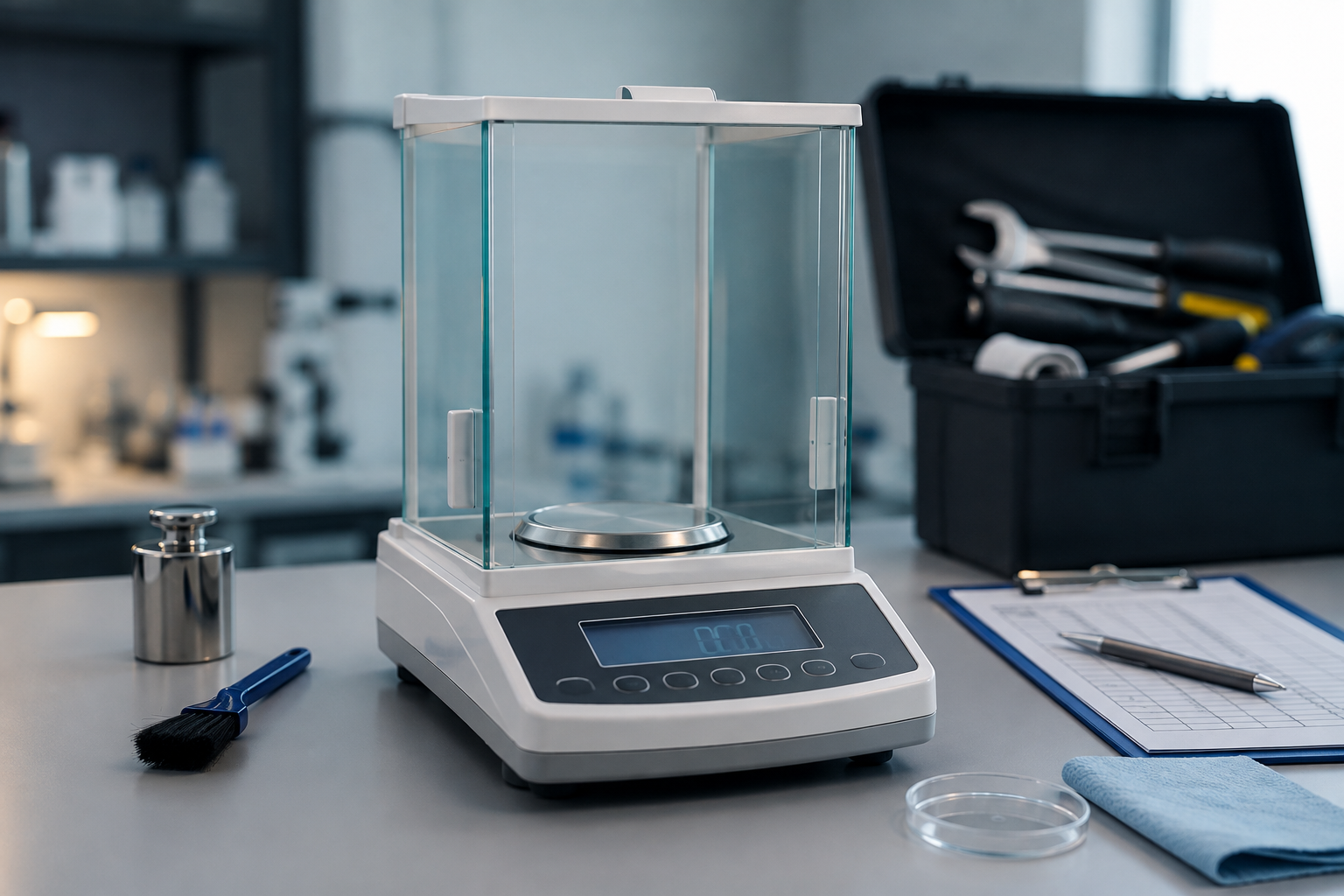
Accurate weighing is essential in laboratories where measurements support research, testing, formulation, quality control, and production. Even a small weighing error can affect later steps in a process. A weighing balance for laboratory applications should therefore provide stable and repeatable readings during regular use.
A balance may not stop working completely when its performance starts to decline. Unstable readings, repeated calibration problems, slow stabilisation, and physical damage can all be early warning signs. Knowing these signs helps laboratory teams decide whether servicing can solve the issue or if replacement is more practical.
Lab Chemicals supplies laboratory equipment and scientific products for research, testing, and industrial applications. Its range supports laboratories looking for suitable weighing and other laboratory equipment.
Why Regular Checks Are Important for Laboratory Balances
A laboratory balance scale needs suitable operating conditions to provide reliable results. Air movement, vibration, temperature changes, contamination, and improper levelling can affect weighing performance.
A weighing balance for laboratory use may continue to display readings even when its accuracy or repeatability has started to decline. Regular checks help identify these problems before they affect laboratory results.
Routine cleaning, levelling, and calibration are also important for maintaining a lab analytical balance. These practices can help laboratories identify whether a balance is still suitable for its intended application.
7 Signs Your Laboratory Balance Needs Attention
1. Readings Keep Drifting
A stable sample should produce a stable reading under consistent conditions. If the displayed weight keeps changing without a change in the sample, the balance should be checked.
Air currents, temperature differences, and vibration can affect a laboratory analytical balance. If these factors have been controlled and the readings continue to drift, servicing may be necessary.
A digital balance for laboratory use should also be placed on a stable, level surface to reduce avoidable measurement errors.
2. The Same Sample Gives Different Results
Repeatability is important for laboratory weighing. If the same sample produces noticeably different readings during repeated measurements, the equipment needs attention.
First, check the weighing surface, sample handling, and environmental conditions. If the problem continues, the laboratory balance scale should be inspected.
For sensitive applications, inconsistent readings from a lab analytical balance can affect the reliability of test results and may indicate a need for servicing or replacement.
3. Calibration Problems Keep Returning
Calibration helps verify whether a balance is producing measurements within the required accuracy range. Occasional calibration is part of normal laboratory practice, but repeated failures should not be ignored.
When calibrating analytical balance equipment, laboratories should follow the manufacturer’s procedure and use suitable reference weights. The balance should also be positioned in an appropriate environment.
If calibrating analytical balance equipment does not resolve recurring accuracy problems, the cause may involve mechanical or electronic components. A laboratory analytical balance that cannot maintain acceptable performance may need professional servicing.
4. The Balance Takes Too Long to Stabilise
A balance should reach a stable reading within a reasonable period. If the display continues fluctuating, check the surrounding conditions before assuming that the equipment has failed.
Possible causes include:
- Air movement around the weighing area
- Vibration from nearby instruments
- Temperature changes
- An unstable workbench
- Incorrect levelling
- Contamination
- Internal equipment faults
These issues can affect a weighing balance for laboratory use, particularly when very small quantities are being measured.
5. Zeroing or Tare Functions Become Unreliable
A balance should normally return to zero after a sample is removed. Problems with zeroing or taring can make routine weighing difficult.
Check whether the weighing pan is clean and correctly positioned. If the issue continues, the digital balance for laboratory use may need technical inspection.
Repeated zeroing problems in a laboratory analytical balance should be addressed promptly when the equipment is used for precise measurements.
6. Physical Parts Show Damage or Wear
Visible damage is another reason to inspect a laboratory balance scale. Laboratory equipment may meet with powders, liquids, chemicals, and cleaning agents during regular use.
Look for:
- Damaged weighing pans
- Cracked draft shields
- Faulty buttons or displays
- Damaged cables
- Loose components
- Corrosion or material buildup
Minor damage may be repairable. Extensive damage, however, can affect the reliability of a lab analytical balance and may make replacement more practical.
7. Maintenance No Longer Restores Performance
Sometimes cleaning, levelling, and calibrating analytical balance procedures no longer resolve recurring problems.
If readings remain unstable despite proper operating conditions, the balance may have internal wear or a component fault. Frequent repairs can also increase costs and interrupt laboratory work.
A weighing balance for laboratory use should be assessed against its current performance requirements. If it cannot meet those requirements after appropriate servicing, replacement should be considered.
Servicing or Replacement: How Should You Decide?
The decision should depend on performance, repair costs, equipment condition, and laboratory requirements rather than age alone.
| Factor | Servicing May Be Suitable | Replacement May Be Suitable |
| Accuracy | Minor issue with a known cause | Accuracy remains outside requirements |
| Calibration | Occasional adjustment needed | Calibration repeatedly fails |
| Repeatability | Can be restored through repair | Results remain inconsistent |
| Physical condition | Limited component damage | Major or recurring damage |
| Repair cost | Reasonable | Repairs are frequent or expensive |
| Equipment support | Parts are available | Equipment is obsolete or unsupported |
Before replacing a laboratory analytical balance, laboratories should identify the actual performance issue and compare repair costs with the benefits of newer equipment.
Basic Checks Before Arranging Balance Service
Some problems with a laboratory balance scale may be caused by the working environment. Basic checks can help identify these issues.
- Place the balance on a stable, level surface
- Keep it away from fans and strong air currents
- Reduce vibration from nearby equipment
- Keep the weighing pan clean
- Check that the draft shield works correctly
- Allow the balance to reach its required operating condition
Consider surrounding equipment since a vacuum oven produces heat and could affect sensitive weighing gear.
What to Consider When Choosing a Replacement
When a replacement is necessary, laboratories should focus on their actual measurement requirements. A weighing balance for laboratory applications should match the required capacity, readability, accuracy, and frequency of use.
Important factors include:
- Required weighing capacity
- Readability and repeatability
- Calibration method
- Sample type
- Operating environment
- Cleaning requirements
- Data connectivity
- Availability of technical support
A digital balance for laboratory work may suit routine weighing, while a lab analytical balance may be more appropriate when higher precision is required. The right laboratory analytical balance should match the laboratory’s specific testing or research needs.
If the laboratory also operates a vacuum oven, it is important to keep heat-generating equipment away from precision weighing areas. This can help maintain more stable environmental conditions around the balance.
Making the Right Choice for Reliable Weighing
Drifting readings, poor repeatability, calibration failures, slow stabilisation, zeroing problems, and physical damage should not be ignored. Early checks can help laboratories identify simple environmental or maintenance issues before they become larger problems.
Servicing can restore a laboratory analytical balance when the fault is repairable. However, if the equipment repeatedly fails to meet required specifications, replacement may offer better reliability and lower long-term disruption.
Lab Chemicals provides laboratory equipment and scientific supplies for research, testing, and industrial requirements. Its solutions can help laboratories evaluate equipment based on their specific applications. Contact Lab Chemicals to explore a suitable weighing balance for laboratory needs.