In any laboratory, consistency is key. Accurate experiments depend on proper mixing, whether you’re preparing samples, testing formulas, or doing research.
Magnetic stirrers make routine work easier and require less manual effort. In many laboratories, since heating is often needed during mixing, combined units are a practical solution.
Lab Chemicals offers laboratory equipment solutions for institutions and industries across India. For buyers, the challenge is not simply purchasing a device. It is choosing one that matches present needs and continues to perform well as requirements grow.
Start With the Purpose of Use
The first question is simple. What exactly will the equipment be used for?
A college lab performing basic experiments has different requirements than a pharmaceutical production facility. Likewise, a research centre working with sensitive compounds may require greater precision.
Think about your daily work:
- Are you handling water-based samples or viscous materials?
- Do experiments require constant heating?
- How many batches are prepared in a day?
- Is the equipment used occasionally or throughout the day?
- Will multiple users operate the same unit?
The answers help narrow down the options.
Many laboratories purchase advanced equipment only to use a fraction of its features. Others choose basic models and later realise they need additional functions. A little planning prevents both situations.
Understanding the Difference Matters
People often confuse the two systems, but they are different.
| Parameter | Magnetic Stirrer | Hotplate Stirrer |
| Mixing function | Yes | Yes |
| Heating capability | No | Yes |
| Best suited for | General laboratory work | Heating and mixing processes |
| Power consumption | Lower | Moderate |
| Equipment footprint | Smaller | Slightly larger |
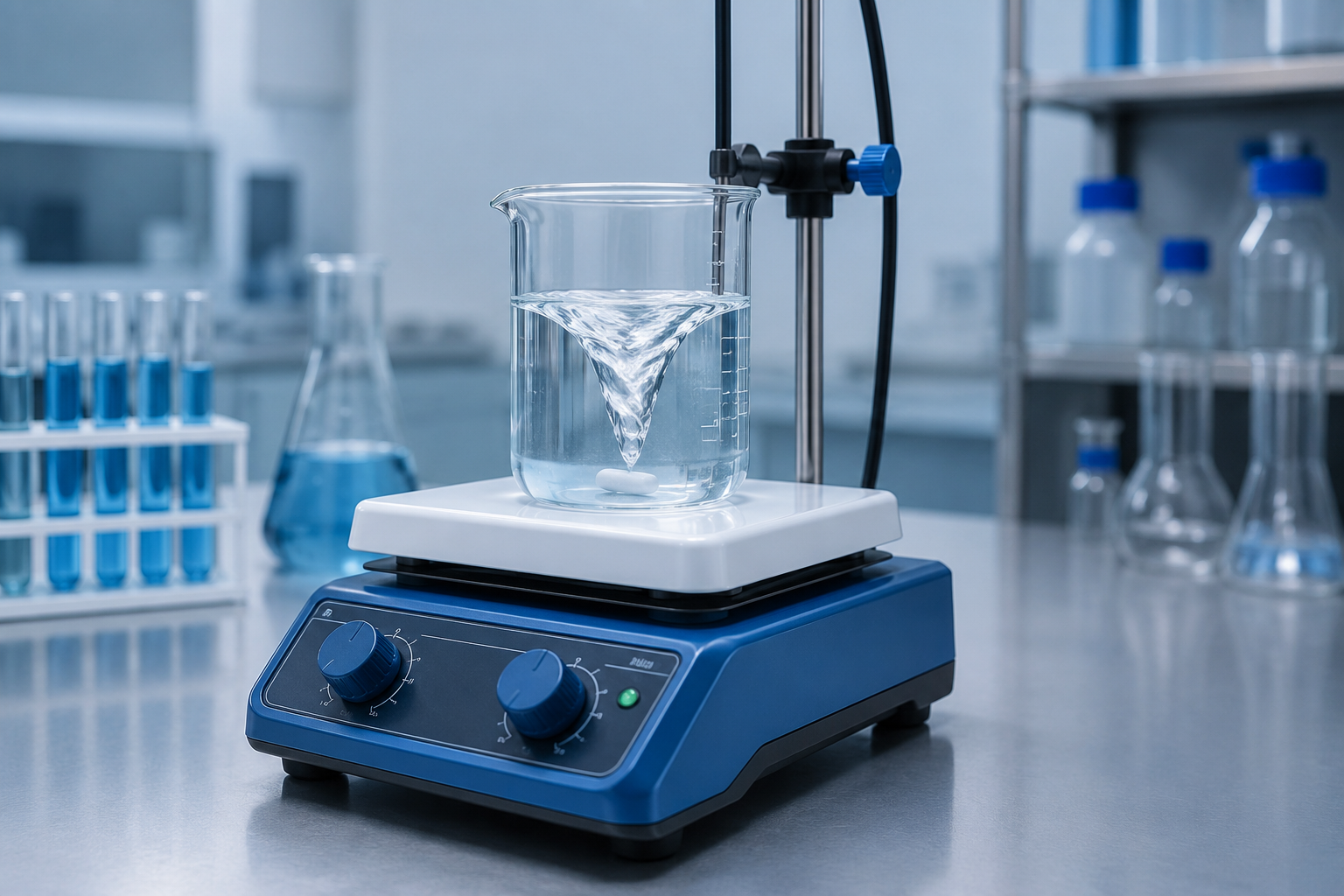
A hot plate and magnetic stirrer combine two functions into a single unit. It saves bench space and reduces the movement of samples between equipment.
For labs that regularly heat substances, it is a useful tool. The choice should depend on the actual workflow rather than trends or preferences.
Capacity Is More Important Than Most Buyers Think
People often focus on features and overlook capacity, which leads labs to replace equipment too soon.
Consider the following:
- Maximum sample volume handled every day.
- Types of beakers and containers in use.
- Expected stirring speed requirements.
- Thickness of liquids being processed.
- Scope for future expansion.
A small research setup can use regular magnetic stirrers. Larger setups with heavier mixtures may need stronger magnets and wider speed options. Buying according to current and future needs usually proves more economical.
Do You Need Heating Every Day?
Not every laboratory process requires heat. Routine sample preparation often involves simple stirring at room temperature. In such cases, standalone mixers can perform the task efficiently.
Still, several activities demand controlled heating:
- Chemical synthesis work.
- Solubility testing.
- Pharmaceutical formulation development.
- Material preparation.
- Research involving temperature-sensitive reactions.
Before purchasing, buyers should check:
- Maximum temperature range.
- Heat distribution across the surface.
- Temperature stability during long operations.
- Safety cut-off systems.
- Ease of adjusting settings.
A reliable hot plate and magnetic stirrer are convenient, but only if they can heat enough for the job.
Surface Material Makes a Difference
Laboratory environments can be demanding. Equipment often comes into contact with acids, solvents, salts, and cleaning agents. The surface material directly affects durability.
Common options include:
Ceramic Tops
- Excellent resistance to chemicals.
- Easy to clean.
- Suitable for demanding laboratory environments.
Stainless Steel Surfaces
- Strong and durable.
- Good for routine applications.
- Long operational life.
Coated Platforms
- Affordable and lightweight.
- Useful for less aggressive applications.
- Simple maintenance requirements.
A reliable magnetic mixer hot plate should work well in the lab and not break down. Selecting the right material reduces maintenance efforts and extends equipment life.
Small Features Can Improve Everyday Work
Sometimes, minor details create the biggest improvements. When evaluating equipment, laboratories should look beyond basic specifications.
Useful features include:
- Digital displays for speed monitoring.
- Temperature indicators.
- Automatic safety shutdown functions.
- Stable bases that reduce vibrations.
- Simple control knobs and interfaces.
- Easy cleaning access.
- Energy-efficient operation.
These additions save time during daily use.
Experienced lab professionals prefer easy-to-use equipment over complex settings. Good design prioritizes usability. This is why many modern magnetic stirrers are easy to use and precise.
Think Beyond Today’s Requirements
Purchasing decisions should not focus only on present workloads. Research projects expand. Production increases. Testing procedures evolve.
Before selecting equipment, it helps to ask a few practical questions:
- Will larger sample volumes be required next year?
- Are additional departments being planned?
- Will heating applications become more common?
- Is technical assistance available if needed?
- Can spare parts be sourced quickly?
Planning for growth prevents unnecessary replacements.
Safety Deserves Equal Attention
Performance matters, but safety matters just as much. Laboratory equipment should always support safe working conditions.
Key points to evaluate include:
- Heat-resistant surfaces.
- Over-temperature protection.
- Stable construction.
- Proper insulation.
- Clear operating instructions.
A reliable hot plate and magnetic stirrer should keep the temperature steady. Regular maintenance also contributes to safety.
Simple practices make a difference:
- Clean surfaces after use.
- Inspect power connections regularly.
- Check stirring performance periodically.
- Replace damaged accessories immediately.
Safe equipment creates confidence among laboratory teams and reduces operational interruptions.
Selecting the Right Supplier Is Part of the Process
The equipment itself is important, but supplier support matters as well. Laboratories should evaluate more than price when comparing options.
Things worth considering include:
- Technical guidance.
- Product availability.
- After-sales support.
- Industry experience.
- Delivery capabilities.
Many organisations compare different Lab Chemicals Suppliers in India before finalising purchases. Reliability and consistent service often influence the decision more than cost alone.
Buyers also look at maintenance support and spare part availability. These factors help reduce downtime and improve operational continuity.
Working with experienced suppliers helps labs trust their investments and get products that fit their needs.
Building a Laboratory Setup That Lasts
Choosing the right stirring equipment isn’t just about technical specs. You also need to consider how it will be used, safety, heating, growth potential, and daily tasks.
The best choice depends on the lab’s needs and goals. Whether you need simple hot plate and magnetic stirrer, or a durable magnetic mixer hot plate, reliability is the most important.
Lab Chemicals supplies scientific equipment to labs across India for research, teaching, manufacturing, and testing. Their stirring solutions help organizations choose products that meet their current needs and future goals.
Browse the Lab Chemicals to find reliable equipment for safe and efficient lab work.