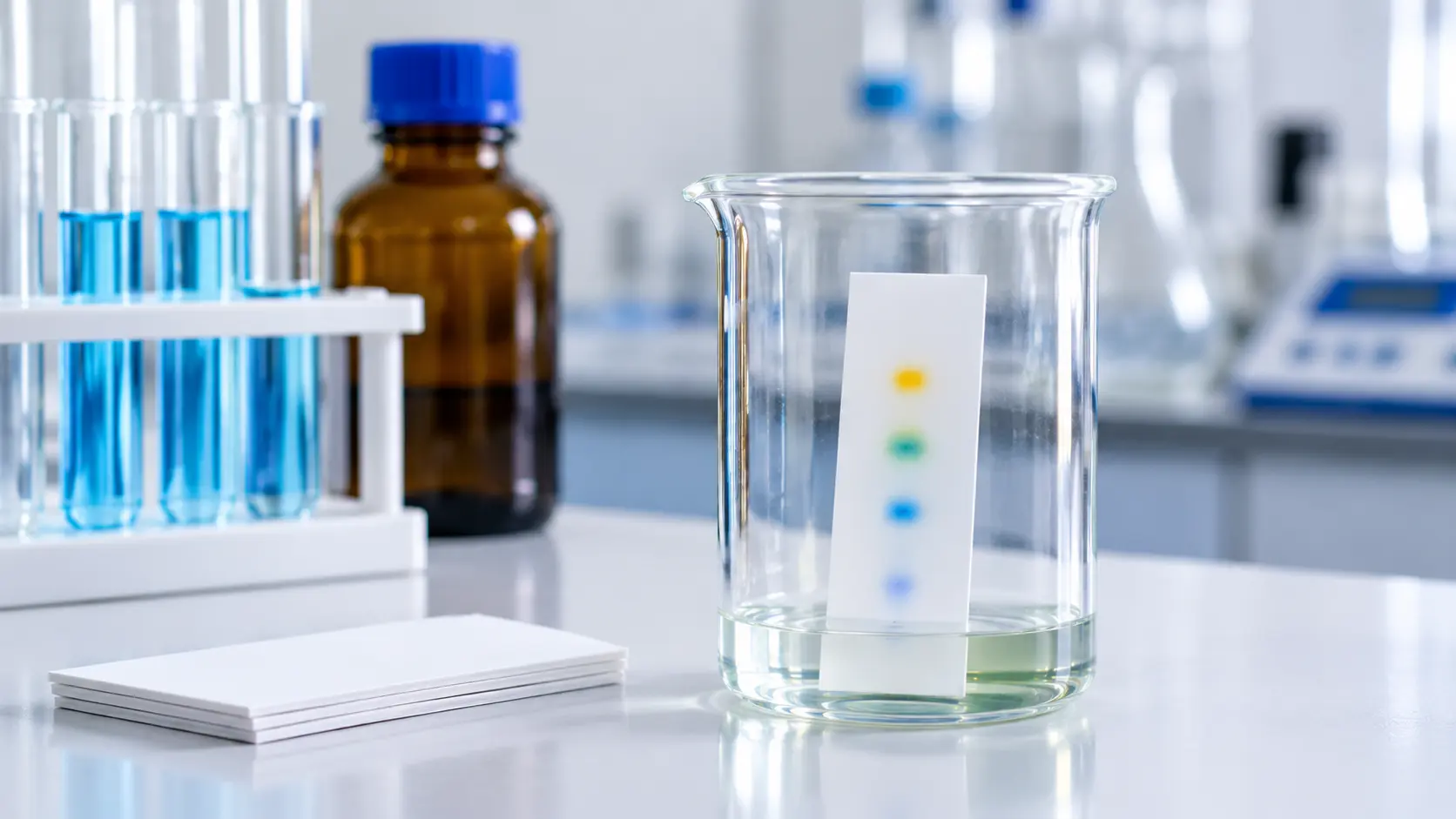
A reaction has been stirring since morning. Someone needs to know whether it is finished, and the answer is needed in ten minutes, not tomorrow. Nobody books instrument time for that. They take a small strip of coated plate, a capillary and a jar of solvent.
Thin layer chromatography has been around for decades. In a world of automated HPLC and mass spectrometry, it still sits on almost every bench. That is not nostalgia. It comes down to speed, cost and how much information a lab gets per minute. This article looks at why thin layer chromatography plates keep earning their place, what separates a dependable plate from an ordinary one, and where the aluminium format fits.
What a TLC Plate Tells You in Ten Minutes
A single developed plate can answer several questions at once:
Is the reaction finished? Spot the starting material, reaction mixture and a co-spot side by side. When the starting material spot fades and a new spot appears, it indicates that the reaction is progressing.
Is the sample reasonably clean? A single spot across more than one solvent system provides an initial indication of sample purity. Additional spots may indicate impurities or other components that require further investigation.
Is it the right compound? Run an unknown sample alongside a reference standard on the same plate and compare their retention factors. Matching results provide preliminary evidence of identity, although additional analytical confirmation may be required.
How do several samples compare? One plate carries many lanes, so a whole set of samples can be screened together.
The number behind most of these decisions is the retention factor, or Rf. It is the distance travelled by the compound divided by the distance travelled by the solvent front. Rf values can be compared across different runs when the plate type, solvent composition, chamber saturation, temperature and other development conditions are kept consistent. That comparability depends heavily on the plate itself.
Where TLC Sits Beside Instrumental Methods
HPLC and GC provide precise quantitative results, while thin layer chromatography plates offer a quick, visual way to assess samples. The two approaches work well together, with TLC often helping determine which samples require further instrumental analysis.
Chemists use it to choose a solvent system before packing a column. A common rule of thumb is to look for an Rf of around 0.2 to 0.35 for the target compound, although the ideal range depends on the separation method and application. They also use TLC to screen fractions as they come off a column. Pharmaceutical labs rely on it for identification and related substances testing, and many pharmacopoeial methods include a TLC step. A quick plate can help determine whether further instrumental analysis is necessary, potentially saving considerable instrument time.
What Makes a Plate Dependable
A TLC result is only as consistent as the layer it runs on. Four features matter most:
A uniform silica layer: Silica Gel 60 has an average pore diameter of 60 Å and a particle size of roughly 10 to 12 µm in the specified classical plate format. This combination supports effective separation and consistent Rf values.
A strong binder: A polymeric binder helps resist cracking and crumbling while allowing the plate to tolerate pencil markings and cutting.
An F254 indicator: Under 254 nm UV light, the background fluoresces green, while UV-absorbing compounds appear as dark spots. This allows many organic compounds to be detected without staining.
Batch-to-batch consistency: Analytical methods remain comparable over time when plates deliver consistent separation performance. Variations in the coating or plate characteristics can affect results between batches.
This is why the TLC plate Merck Silica Gel 60 F254 turns up so often in pharmacopoeial methods and laboratory SOPs. When a method specifies a particular plate, using the same product helps maintain comparable results between analysts and laboratories.
The Case for an Aluminium TLC Plate
Glass has long been the traditional backing, but the aluminium TLC plate has become a practical choice for routine laboratory work. The reasons are straightforward. The sheet is flexible, so a 20 × 20 cm sheet can be cut with scissors into several smaller plates. That brings down the cost of each analysis. It is lighter and less likely to break during transit or on the bench. Aluminium-backed plates can also be used in suitable heating procedures when a staining reagent requires heat for visualisation, provided the manufacturer’s temperature recommendations are followed.
Glass keeps its advantages for specialised work. Its rigidity, chemical resistance and heat stability make it suitable for applications such as scanning densitometry and certain derivatisation procedures. HPTLC-MS compatibility depends on the plate format and analytical method. Plastic plates offer a lightweight and economical option for teaching and field applications.
Here is where each format tends to fit best:
- Aluminium: Routine analysis, reaction monitoring and applications where plates need to be cut to size.
- Glass: Scanning densitometry and specialised analytical procedures.
- Plastic: Teaching laboratories and selected field applications.
Practices That Protect Plate Performance
Even a good plate needs sensible handling. Laboratories that obtain consistent results tend to follow a few basic practices:
- Store plates at room temperature in a dry environment and retain their original packaging. Silica absorbs moisture from the air, which can affect separation performance.
- Activate moisture-exposed plates when required, following the manufacturer’s recommended temperature and duration for the specific backing material.
- Handle plates by the edges so the adsorbent layer remains clean.
- Mark the origin and solvent front with a pencil because most inks can travel with the mobile phase.
- Keep spots small, around 1 to 2 mm, and allow each application to dry before adding another.
- Prepare fresh mobile phase when required by the method and allow the developing chamber to become saturated with solvent vapour before introducing the plate.
Recording the plate type, solvent system, development conditions and Rf values alongside each result makes the work easier to reproduce by another analyst.
One Consumable, Many Industries
The same plate serves very different laboratories. Pharmaceutical teams use it for purity and identity checks. Synthesis chemists monitor reactions with it. Natural product researchers profile plant extracts and essential oils. Food laboratories investigate dyes, preservatives and adulterants. Environmental and agricultural laboratories use it for preliminary screening of pesticide residues. Teaching laboratories rely on it to demonstrate how separation works.
Few laboratory consumables cover that much ground at such a low cost.
“A TLC plate is a small, inexpensive item, yet it carries a surprising share of daily decisions in a laboratory. Consistent plates give consistent answers, and consistent answers keep projects moving. Matching the format to the work, whether that is an aluminium sheet for routine analysis or glass for specialised densitometry, makes those answers even more useful. Sourcing plates through dependable Lab Chemicals Distributors in India also helps laboratories maintain consistent access to chromatography consumables, suitable solvents and batch documentation. In a laboratory where the next step depends on a quick, trustworthy answer, that consistency is worth more than it looks.”