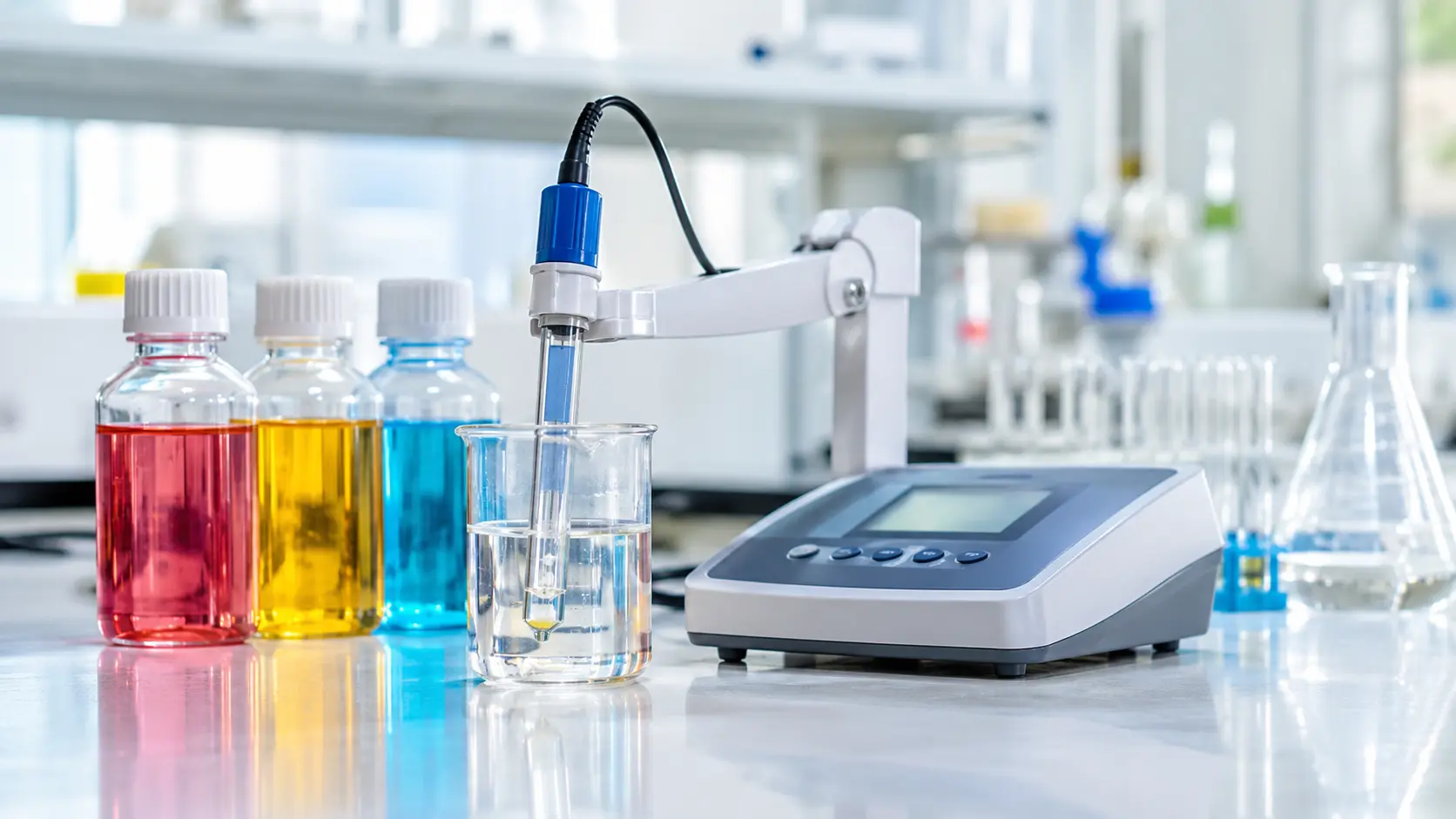
Every pH reading in a laboratory rests on a reference. The pH meter itself has no built-in knowledge of what pH 4 or pH 7 looks like. It has to be taught, and the teacher is a pH calibration solution. Without it, a meter produces numbers, but those numbers cannot be defended.
This article explains what a pH calibration solution is, how it works with a pH meter, where laboratories use it and why it deserves as much attention as the instrument itself.
What Is a pH Calibration Solution?
A pH calibration solution is a pH buffer solution with a certified pH value, supplied specifically to calibrate pH meters and electrodes. Like any buffer, it resists changes in pH when small amounts of acid or base are added, which keeps its value stable. In analytical chemistry it is not used as a reaction medium. It is used as a reference standard.
By measuring a buffer of known value, the analyst confirms that the instrument reads correctly across the pH range of interest. Samples measured afterwards can then be reported with confidence, and the results can be linked back to recognised measurement standards.
How It Works with a pH Meter
A pH electrode produces a small voltage that changes with the hydrogen ion activity of the solution. The meter converts that voltage into a pH value, using settings established during calibration.
- The first buffer sets the offset, which shows where the electrode reads in a known solution.
- The next buffer sets the slope, which shows how the voltage changes per pH unit.
- Further buffers extend the calibration across a wider range and confirm the response is consistent.
Two-point calibration is common for routine work. Three-point calibration is used where compliance frameworks call for it. The accuracy of every point depends on the accuracy of the buffer used.
Characteristics of a Reliable pH Calibration Solution
A dependable laboratory pH buffer shows several features:
- Certified value and accuracy: a stated pH, commonly with an accuracy of ±0.05 pH units.
- Traceability: a documented link to primary standards such as NIST, supported by production under ISO 17034 and ISO 17025 guidelines.
- Certificate of Analysis: the lot number and certified values at several temperatures.
- Protective packaging: closures and bottle walls that limit carbon dioxide absorption, with a clear shelf life.
- Ready-to-use format: no dilution or preparation before calibration.
Where Laboratories Use pH Calibration Solutions
- Laboratory pH meter calibration: bench meters, portable probes and inline sensors are calibrated before use.
- Pharmaceutical and chemical testing: USP <791> compliant buffers support validated pH methods for drug products and APIs.
- Food and beverage quality control: pH checks on juices, dairy and fermentation products, and in water treatment.
- Water and environmental analysis: pH 4.0, 7.0 and 9.2 calibration for surface water, groundwater, wastewater and effluent.
- Biochemistry and buffer preparation: reference pH standards support accurate buffers for HPLC, biochemical assays, enzyme studies and SDS-PAGE running buffers.
- Academic and industrial research: standardised calibration for pH-dependent experiments and manufacturing workflows.
Calibration Practices That Support Accuracy
Good practice keeps a buffer’s certified value intact from the bottle to the meter:
- Let the electrode and buffers reach the same temperature, ideally around 25 °C.
- Rinse the electrode with deionised water and blot it dry with lint-free tissue between buffers.
- Begin with pH 7.00, wait for a stable reading, then calibrate with pH 4.00 or pH 9.20 according to the sample range.
- Use fresh buffer for every calibration and never return used buffer to the bottle.
- Record the lot number, expiry date and calibration result in the instrument log.
Why Laboratories Depend on It
The dependence is practical. A certified pH calibration solution gives consistent readings from one analyst to the next, one day to the next and one site to the next. It supports audit trails in regulated laboratories, since the certificate, lot number and calibration record link together. It reduces repeat testing, because results are less likely to be questioned. And it allows laboratories to report pH values with confidence in quality control, compliance and research.
Choosing a pH Calibration Solution with Confidence
A pH calibration solution is a small bottle with a large responsibility. The meter reads only as true as the reference it was set against, so the certified value, traceability and packaging deserve careful attention at the time of purchase. Sourcing from dependable Lab Chemicals Distributors in India helps laboratories receive buffers with complete documentation and a reliable shelf life, so each calibration begins on solid ground.